
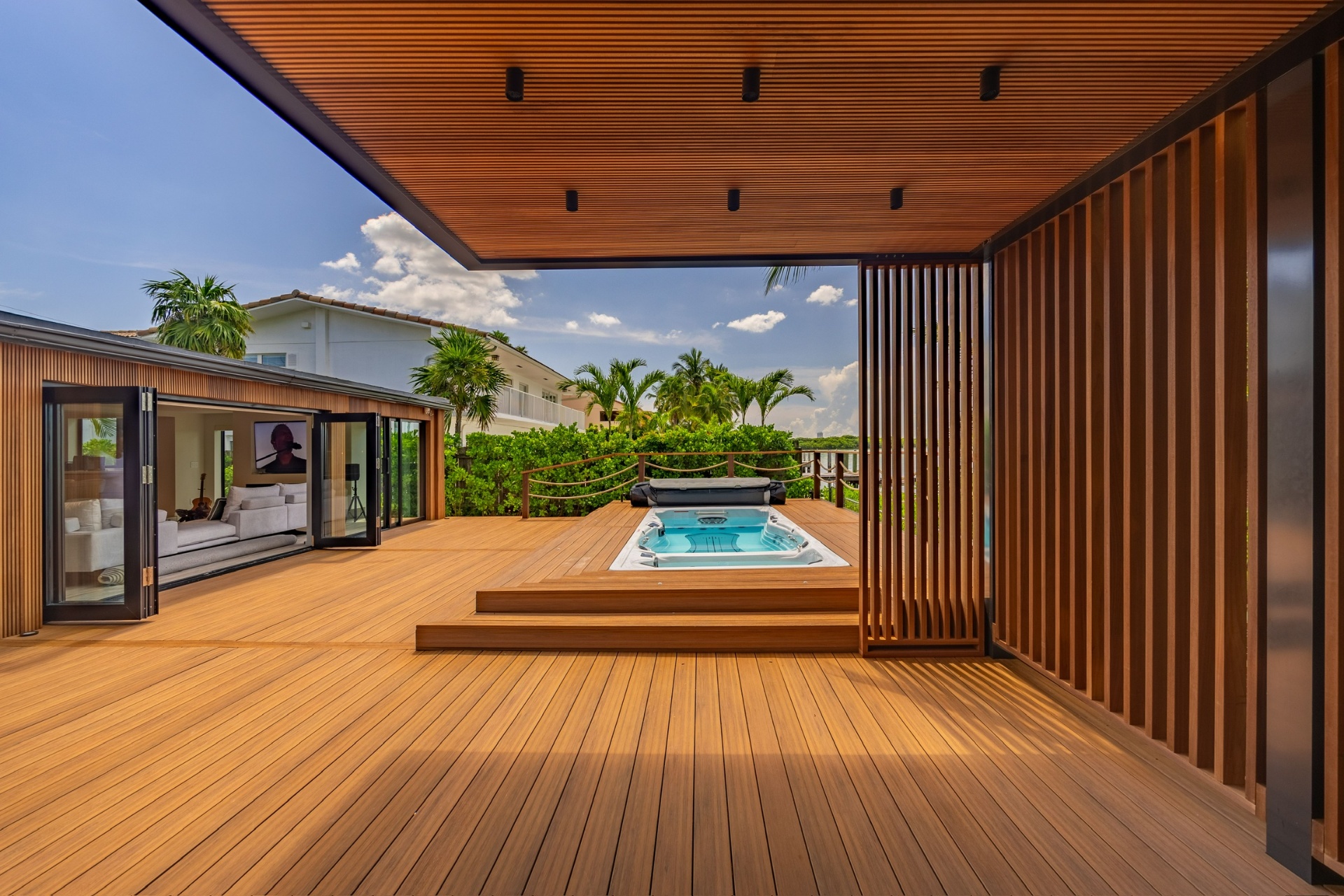
Hardwood decking represents the pinnacle of outdoor living surfaces. Natural hardwoods offer unmatched beauty, durability, and longevity compared to synthetic alternatives. But which hardwood species is right for your project? This guide compares the top decking hardwoods across every important factor.
Top Hardwood Species for Decking
| Species | Janka Hardness | Lifespan | Fire Rating | Price Range |
|---|---|---|---|---|
| Ipe (Brazilian Walnut) | 3,680 lbf | 50+ years | Class A | $14–$25/sf |
| Cumaru (Brazilian Teak) | 3,540 lbf | 30–50 years | Class A | $6–$10/sf |
| Massaranduba (Bulletwood) | 3,190 lbf | 30–40 years | Class B | $5–$9/sf |
| Garapa (Brazilian Ash) | 1,210 lbf | 20–30 years | Class B | $4–$7/sf |
| Tigerwood | 1,850 lbf | 25–35 years | Class B | $5–$8/sf |
Ipe: The Gold Standard
Ipe consistently ranks as the #1 hardwood for decking worldwide. Its combination of extreme hardness, natural decay resistance, and Class A fire rating make it the benchmark against which all other decking materials are measured.
Key advantages:
- Janka hardness of 3,680 lbf — nearly four times harder than oak
- Class A fire rating — certified for wildfire zones and commercial applications
- 50+ year lifespan with minimal maintenance
- Naturally resistant to rot, insects, and marine borers
- Rich olive-brown to dark chocolate color
- Proven performance in the world\'s most demanding installations
Considerations:
- Requires pre-drilling due to extreme density
- Heavier than other hardwoods (69 lbs/cu ft)
- Higher initial material cost
Cumaru: The Budget Alternative to Ipe
Cumaru offers similar density and hardness to ipe at a lower price point. It is an excellent choice for projects where ipe-level performance is desired but budget is a consideration.
Pros: Similar hardness to ipe, attractive reddish-brown color, good availability
Cons: More prone to surface checking than ipe, requires more careful acclimation
Planning a decking or cladding project?
Use our material estimator or explore our premium hardwood and thermo wood materials.
Garapa: The Lighter Option
Garapa (Brazilian Ash) offers a blonde/golden color that is unique among hardwoods. It provides a lighter aesthetic that works well in modern designs.
Pros: Light golden color, good durability for its price, lighter weight than ipe
Cons: Lower Janka rating, shorter lifespan than ipe or cumaru, may require more frequent oiling
Choosing the Right Species
Match your species to your project requirements:
- Maximum durability and fire safety: Ipe — no compromise on performance
- Best value with high performance: Cumaru — 85% of ipe\'s performance at 70% of the cost
- Light color aesthetic: Garapa — the best blonde hardwood option
- Distinctive appearance: Tigerwood — unique striped grain for statement decks
- Budget hardwood: Massaranduba — solid performance at the lowest hardwood price
Maintenance Across Species
All tropical hardwoods share similar maintenance profiles:
- Annual cleaning with mild soap and water
- Optional UV-protective oil 1–2 times per year to maintain color
- All species weather to silver-gray if left untreated
- No chemical treatments, sealants, or painting required
- Use stainless steel fasteners with all species
The primary maintenance difference between species is that softer hardwoods (garapa, tigerwood) may show wear patterns sooner than ipe or cumaru in high-traffic areas.
Conclusion
For projects where performance, longevity, and fire safety are priorities, ipe is the clear winner. Its 50+ year lifespan, Class A fire rating, and extreme hardness justify the premium. For budget-conscious projects that still want genuine hardwood performance, cumaru offers the best balance of price and durability.
Ready to start your project?
Explore our premium materials or get help planning your project.