
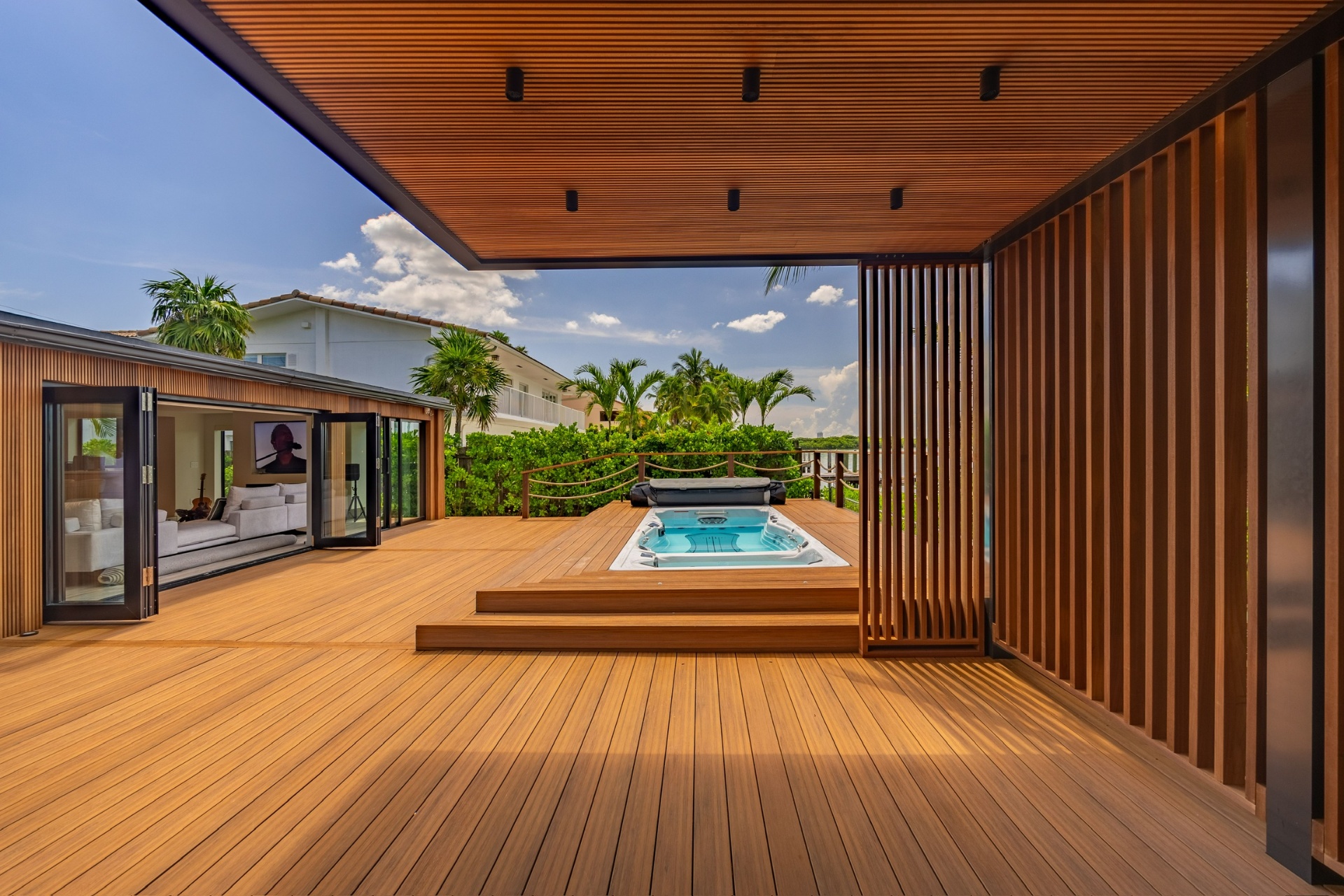
The debate between hardwood and composite decking continues to evolve as both categories improve. This guide provides an objective comparison of natural hardwood decking (including ipe, garapa, cumaru, and tigerwood) against modern composite alternatives, helping you make the best choice based on your priorities, budget, and project requirements.
Understanding Hardwood Decking
Hardwood decking refers to boards milled from dense tropical or temperate hardwood species. The most popular species for exterior decking include:
- Ipe (Brazilian Walnut): The gold standard — Janka hardness 3,680, Class A fire rating, 50+ year lifespan
- Cumaru (Brazilian Teak): Similar density to ipe at a lower price point
- Garapa (Brazilian Ash): Lighter color option, good durability
- Tigerwood: Distinctive striped grain pattern
All these species share common advantages: natural beauty, extreme durability, and no chemical treatment requirements.
Understanding Composite Decking
Composite decking is manufactured from a mixture of wood fibers and plastic polymers. The three main types are:
- Capped composite (WPC): Wood-plastic core with a protective polymer cap layer. Most common type.
- PVC decking: 100% synthetic — no wood fibers. Maximum moisture resistance.
- Uncapped composite: Budget option without protective cap. Less durable.
Side-by-Side Comparison
| Factor | Hardwood (Ipe) | Premium Composite |
|---|---|---|
| Lifespan | 50+ years | 25–30 years |
| Scratch Resistance | Excellent | Moderate |
| Heat Retention | Stays cooler | Can get very hot |
| Fire Rating | Class A | Varies (B–C typical) |
| Repairability | Can be sanded and refinished | Cannot be repaired |
| Appearance | Natural, unique grain | Uniform, manufactured |
| Initial Cost | Higher | Moderate–High |
| Lifetime Cost | Lower (no replacement) | Higher (replacement at 25–30 years) |
| Environmental | Natural, biodegradable | Not recyclable at end of life |
Planning a decking or cladding project?
Use our material estimator or explore our premium hardwood and thermo wood materials.
Pros and Cons of Hardwood Decking
Pros:
- Unmatched natural beauty and warmth
- Longest lifespan of any decking material
- Can be refinished multiple times
- Stays cooler underfoot than composite
- Class A fire rating (ipe)
- Increases property value
- Biodegradable at end of life
Cons:
- Higher initial material cost
- Requires pre-drilling (for ipe)
- Optional annual oiling to maintain color
- Heavier — may require stronger substructure
Pros and Cons of Composite Decking
Pros:
- Low maintenance — no staining or sealing
- Consistent color and pattern
- Splinter-free surface
- Easier to cut and fasten
- Wide color selection
Cons:
- Shorter lifespan (25–30 years)
- Gets very hot in direct sun
- Cannot be refinished if damaged
- Manufactured appearance under close inspection
- Not recyclable — ends up in landfills
- May develop mold between cap and core layers
Making Your Decision
Your choice should align with your priorities:
- Choose hardwood if you value natural beauty, maximum durability, fire safety, and long-term value
- Choose composite if low maintenance is your top priority and you prefer a uniform appearance
For many homeowners, hardwood decking — particularly ipe — represents the best investment. The higher initial cost is offset by a lifespan that is 2–3× longer than composite, and the natural beauty of real wood creates an outdoor space that feels authentic and premium.
Ready to start your project?
Explore our premium materials or get help planning your project.