
Wall & Ceiling
Thermally Modified Wood Cladding & Siding
Real wood modified with heat and steam alone — no chemicals. Class 1 to Class 2 durability, extreme dimensional stability, and a 30+ year service life for facades, soffits and ceilings.
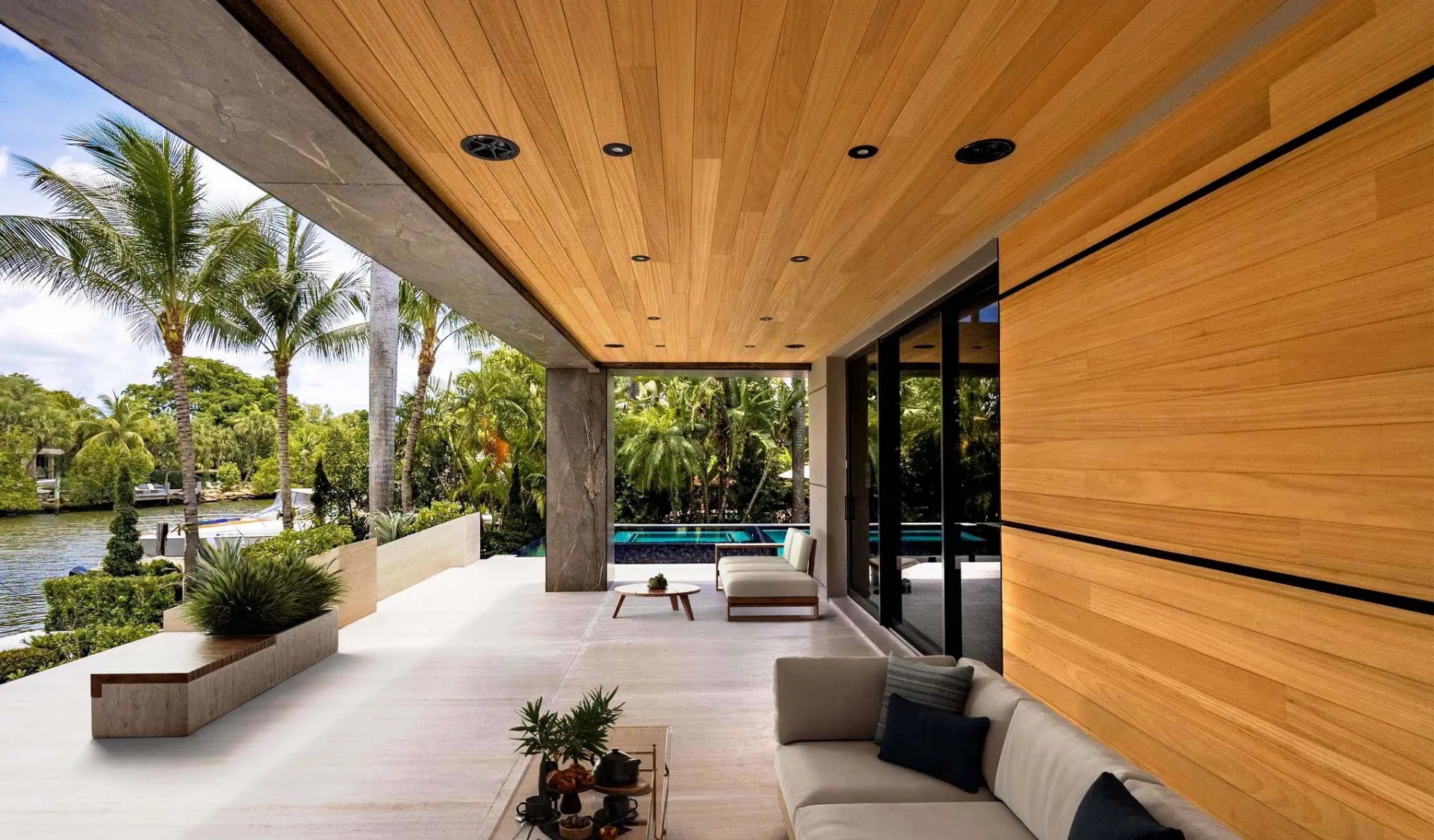 Most Popular
Thermo Ayous
Clear, exotic grain with superior insulation. A sustainable, lightweight choice for modern ceilings and facades.
From $209 / 15 sf bundle
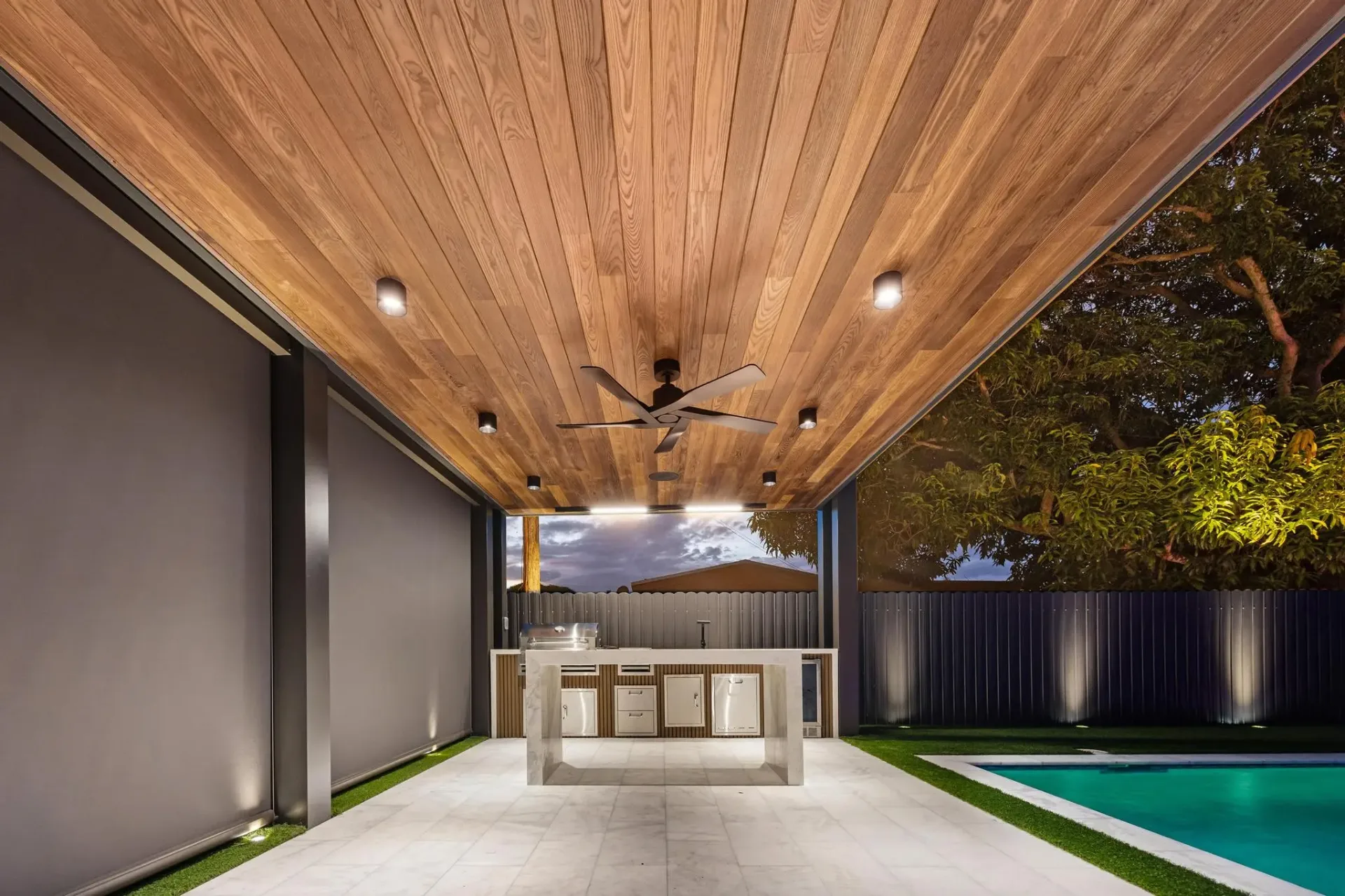
Thermo Ash
Deep 'Crème Brûlée' tones and bold grain. Sustainable hardwood stability with a rich, refined aesthetic.
From $329 / 15 sf bundle

Thermo Scandinavian
A timeless Nordic aesthetic with extreme dimensional stability. Sustainably sourced for high-performance exterior and interior applications.
From $119 / 15 sf bundle

Thermo Clear Radiata
Luxury knot-free pine with a clean, uniform grain. Refined performance for premium modern architecture.
From $159 / 15 sf bundle
The material
What is thermally modified wood?
Thermally modified wood is real, solid wood cooked in a low-oxygen kiln at roughly 380–420 °F using nothing but heat and steam. That heat permanently rewrites the wood’s cell chemistry: the hemicellulose that decay fungi and insects feed on is broken down, and most of the sites that absorb moisture are closed off.
What comes out is a board that behaves less like timber and more like a stable engineered material — it barely moves with the seasons, resists rot and termites on its own, and carries a deep, even color all the way through rather than a surface stain. Nothing is added, so the wood stays chemical-free and recyclable at the end of its life.
Because the durability is built in rather than applied, thermally modified wood is used where cedar and pressure-treated lumber fall short: rainscreen facades, exposed soffits, wide-format ceilings, saunas, and decking.
Performance
Why architects specify it
Heat and steam only
No preservatives, no resins, no copper salts. The performance comes from the modification itself, so off-cuts can be handled, burned, or recycled like untreated wood.
Extreme dimensional stability
Moisture uptake drops sharply after modification, cutting seasonal swelling and shrinking. Reveals stay even, coatings last longer, and wide boards stay flat.
Rot and insect resistance
The process removes the hemicellulose that decay fungi and termites feed on, giving Class 1 to Class 2 durability without toxic chemicals.
Sustainable sourcing
Fast-growing and FSC/PEFC certified species reach tropical-hardwood performance, backed by EPD documentation for specification and green building credits.
The process
How it is made
- 01
Kiln drying
Boards are dried down to near zero moisture so the wood can be heated without checking or internal stress.
- 02
Steam displacement
Steam floods the sealed chamber and pushes out the oxygen, so the wood can reach high temperatures without burning.
- 03
Thermal modification
The temperature is raised in stages to 380–420 °F and held. Higher temperatures mean darker color and higher durability class.
- 04
Cooling and conditioning
The charge is slowly cooled and moisture is reintroduced to a stable equilibrium, then graded and profiled.
Selection
Choosing a species
Thermo Ayous
Clear, lightweight, exotic grain — the most popular choice for facades and ceilings.
Thermo Ash
Class 1 durable European ash with deep chocolate-brown tones and bold grain.
Thermo Scandinavian
Nordic pine, the value entry point, with authentic Scandinavian character.
Thermo Clear Radiata
Knot-free and uniform, for minimal modern architecture.
FAQ
Thermally modified wood questions
Buying & planning guides
Practical guides for choosing the right material, profile, and application.
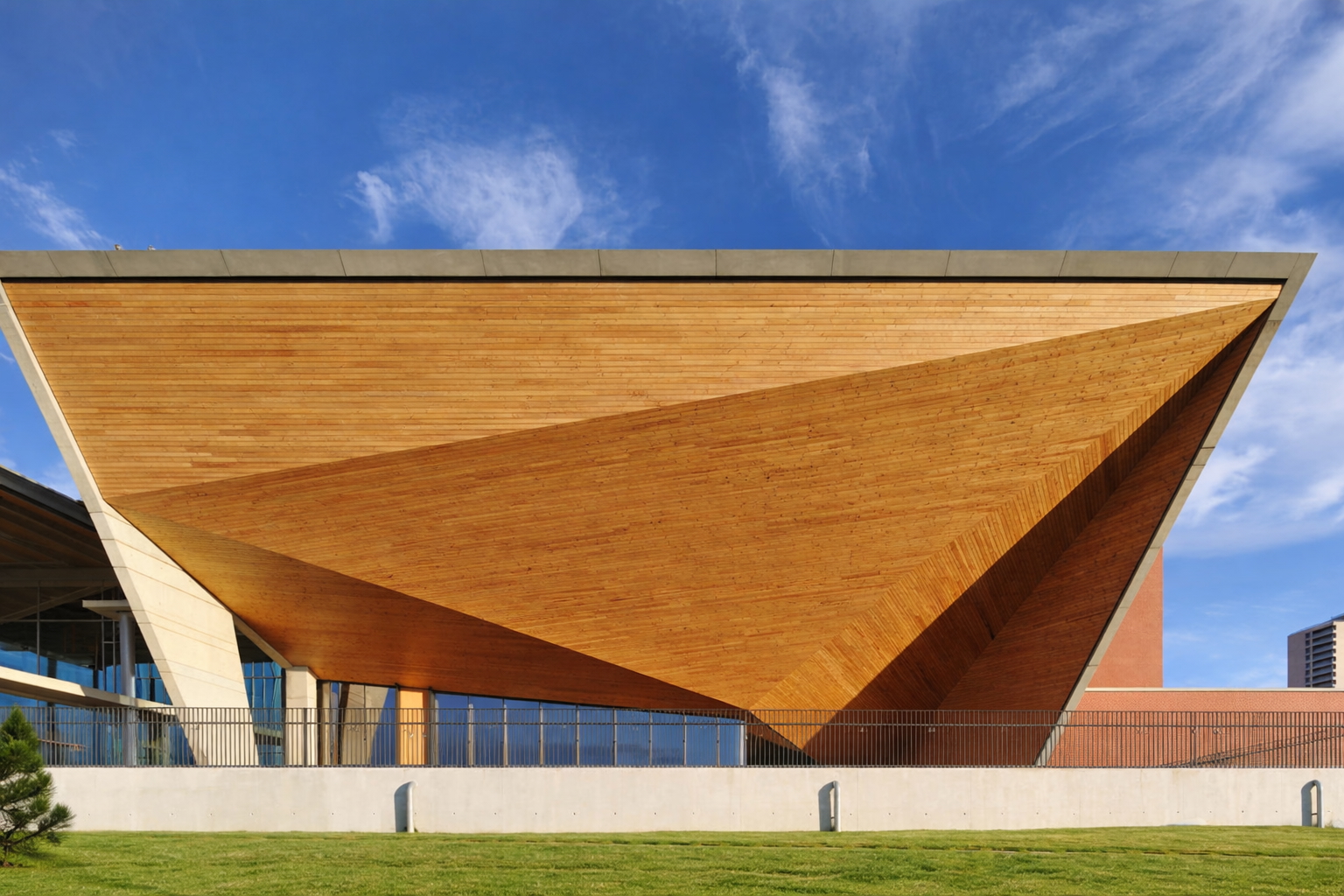
cladding · 8 min read
Thermally Modified Wood Guide: What It Is and Why It Matters
Complete guide to thermally modified wood. Learn how the thermal modification process works, its benefits for exterior applications, and why it outperforms traditional treatments.
Read guide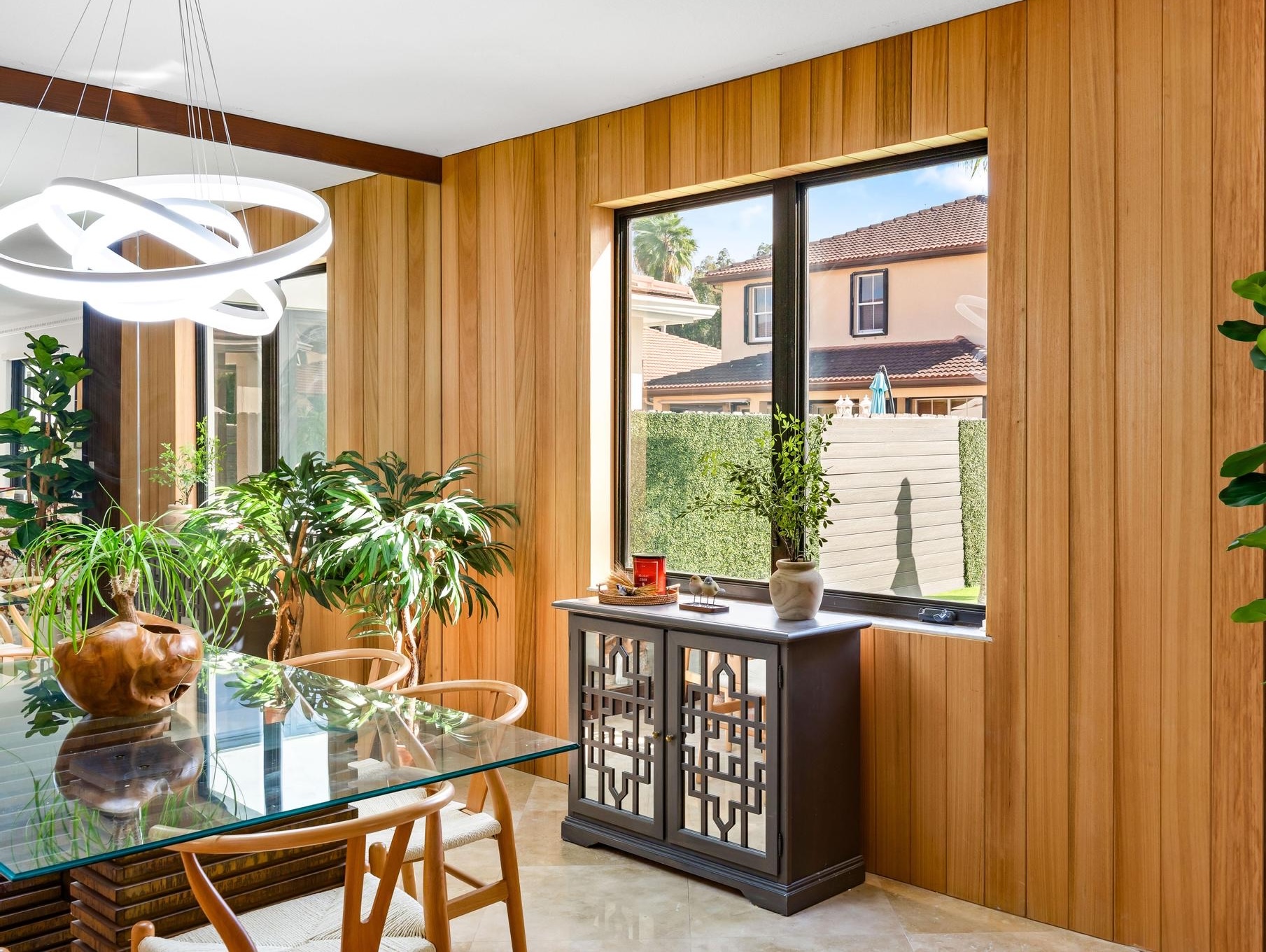
comparison · 7 min read
Thermo Wood vs Cedar: Which Is Better for Exterior Cladding?
Compare thermo wood and cedar for exterior cladding. Learn the differences in durability, cost, maintenance, and environmental impact for your building project.
Read guide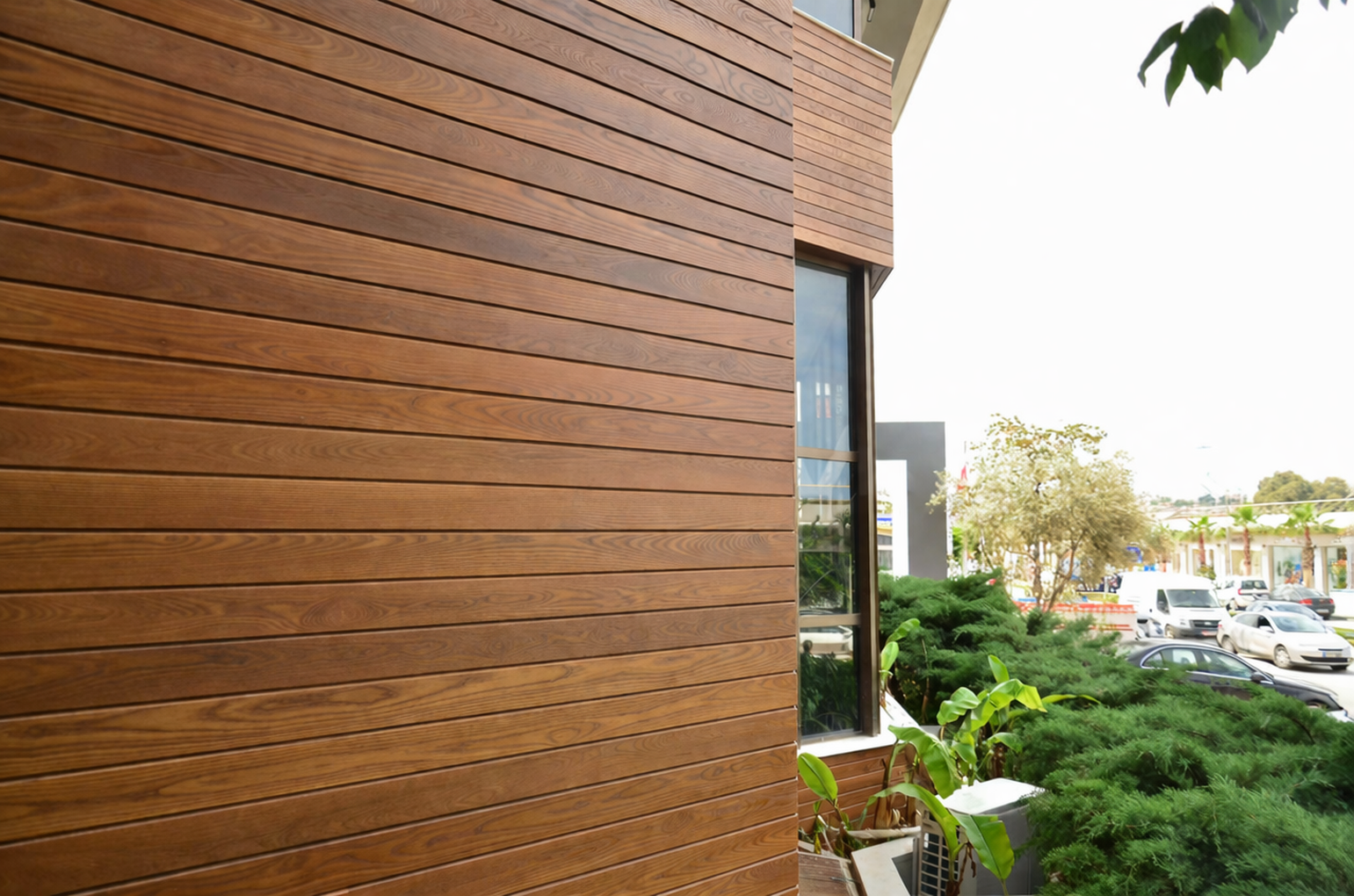
cladding · 6 min read
How Long Does Thermo Wood Last? Durability and Lifespan Guide
Learn how long thermo wood lasts in exterior cladding and decking applications. Covers lifespan expectations, performance factors, and maintenance tips.
Read guide