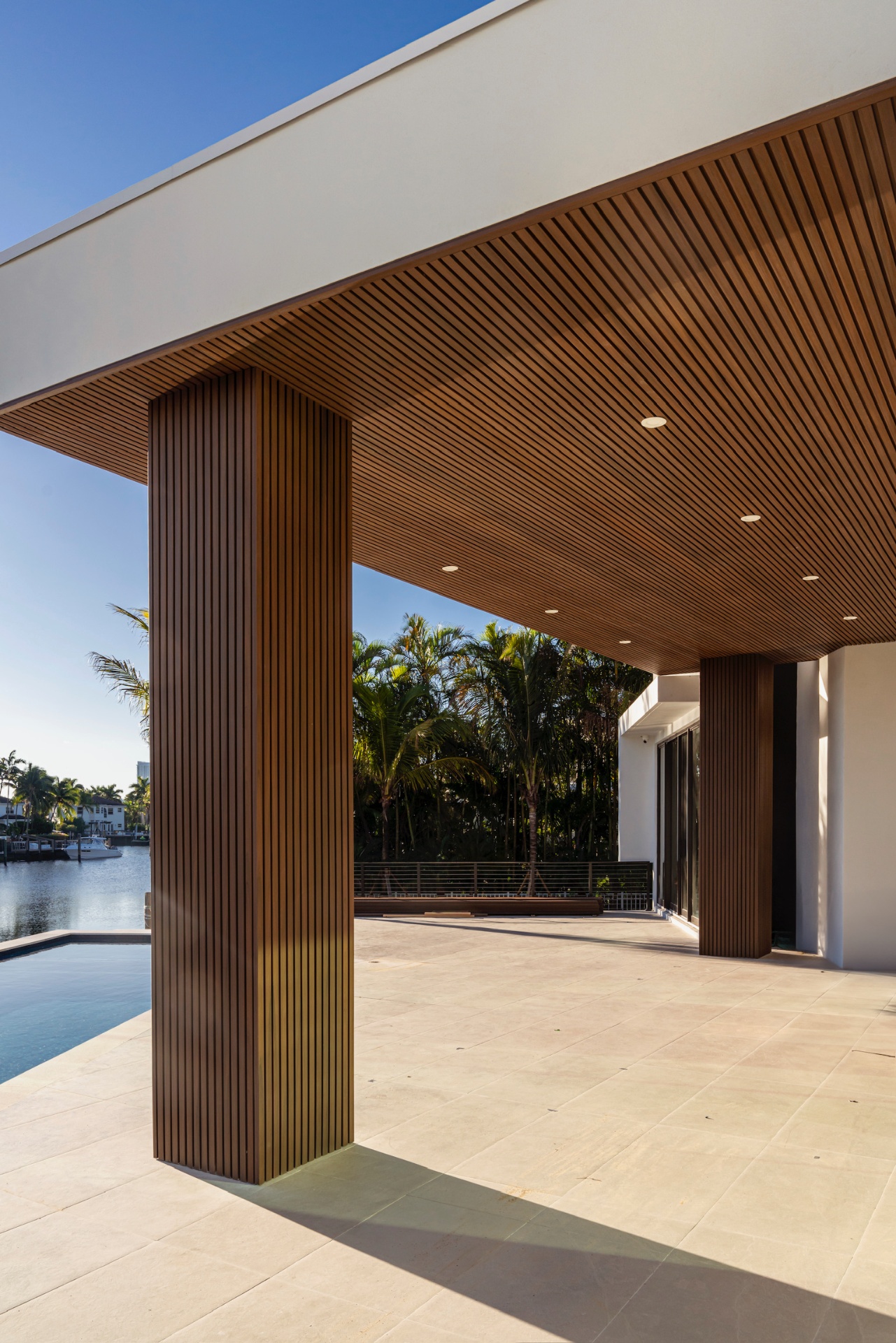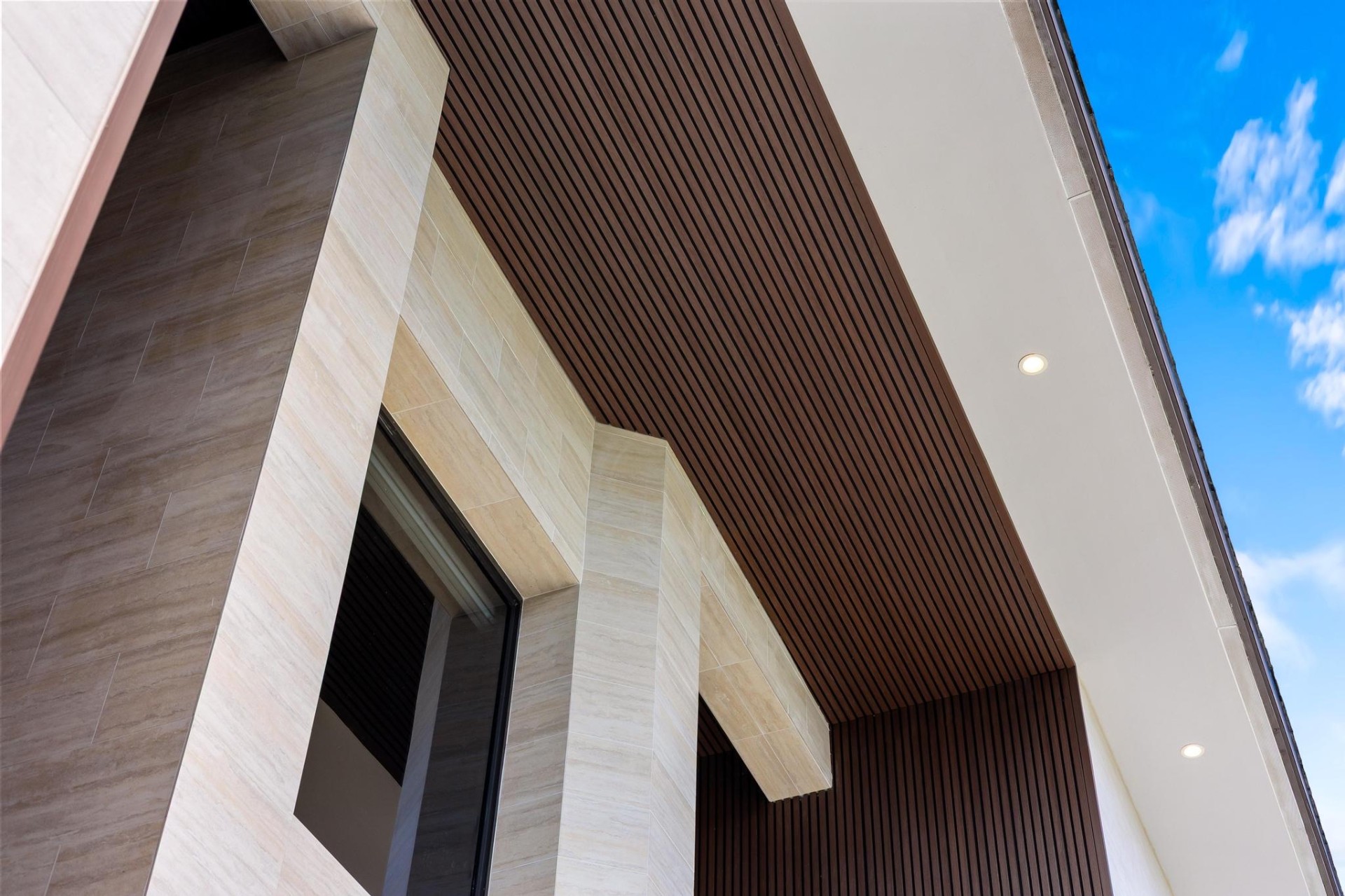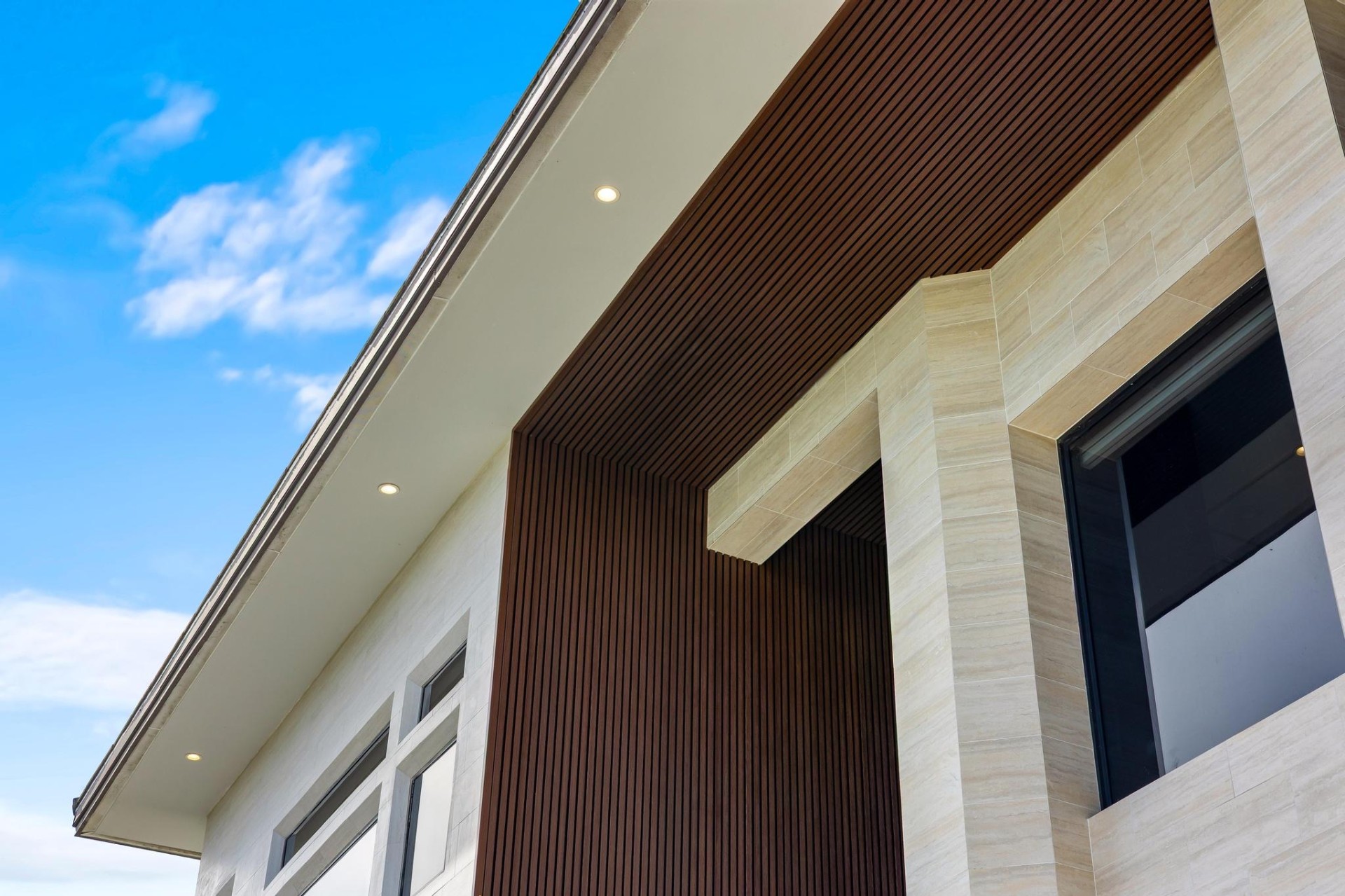
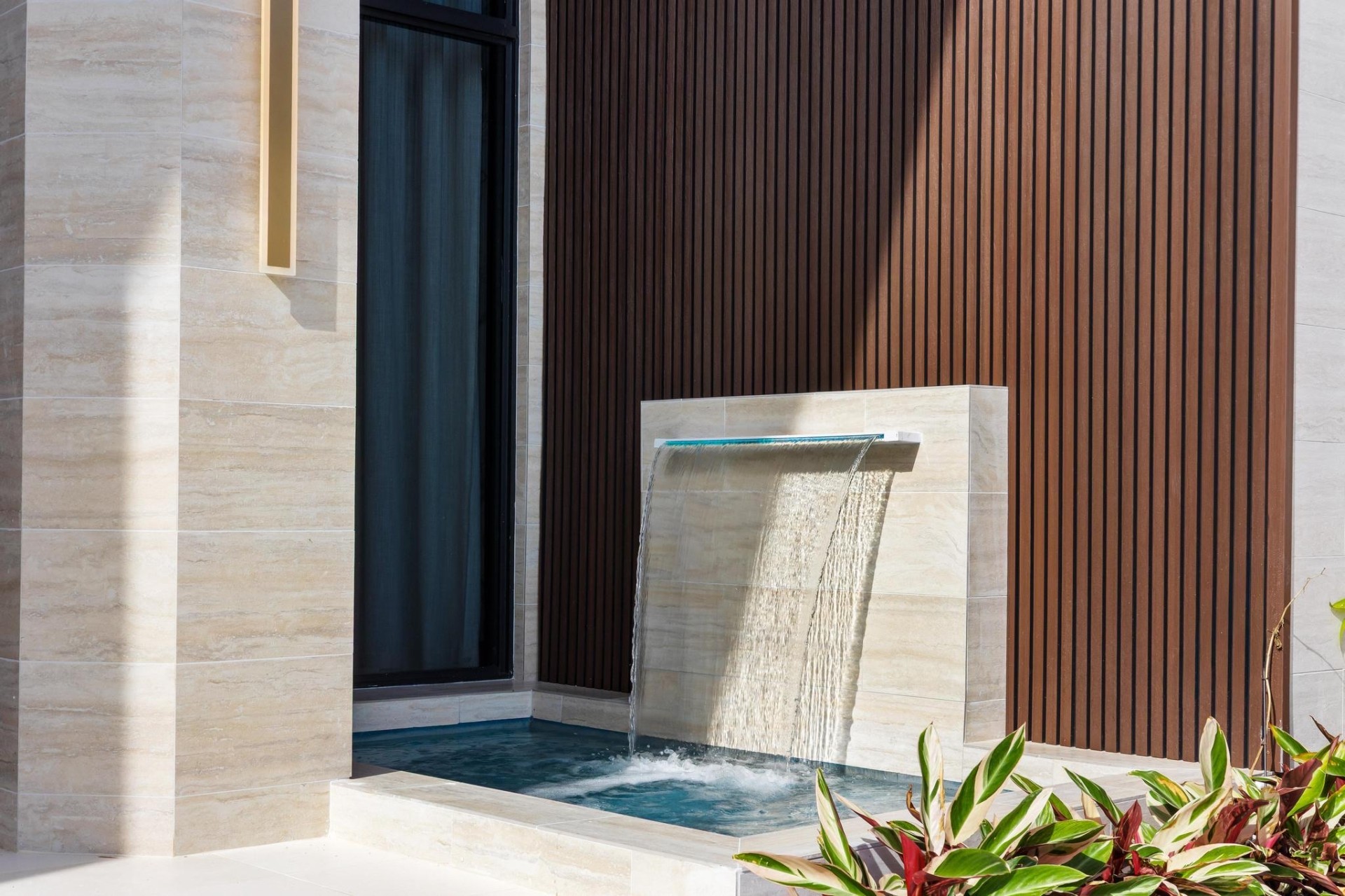
Composite cladding installs faster than natural wood because the boards are dimensionally stable, pre-finished, and machined to consistent tolerances. This guide walks through the full workflow — from substrate prep to the final board — using the methods our installers use on residential and commercial projects.
Tools & Materials Checklist
- Composite cladding boards (calculate total sq ft × 1.10 for waste)
- 1×2 or 1×3 pressure-treated furring strips (vertical battens)
- Stainless steel trim-head screws (#8 × 2")
- Weather-resistive barrier (WRB) — house wrap or peel-and-stick
- Drainage mat or rainscreen clips (recommended)
- Miter saw with fine-tooth carbide blade (80T+)
- Cordless drill/driver, level, chalk line, tape measure
- Starter trim, J-channel, and corner trim (composite or aluminum)
Step 1 — Prepare the Substrate
Composite cladding is installed over a rainscreen — never directly to the wall sheathing. Install a continuous weather-resistive barrier (Tyvek, peel-and-stick, or equivalent) over the sheathing, lapping all seams correctly. Confirm flashing is in place at all windows, doors, and penetrations.
Step 2 — Install Furring Strips
Fasten vertical 1×2 or 1×3 pressure-treated furring strips at 16" on center (24" max), screwed through the WRB into the wall framing. This creates a 3/4" ventilated cavity behind the cladding that allows drainage and airflow — essential for long-term performance.
For horizontal cladding boards, furring runs vertically. For vertical cladding, install horizontal furring first, then a second layer of vertical furring on top (a "double-strap" cavity).
Planning a decking or cladding project?
Use our material estimator or explore our premium hardwood and thermo wood materials.
Step 3 — Set the Starter Course
Snap a level chalk line about 1" above the bottom of the wall. Install a starter trim or the first board perfectly level — every board above relies on this reference. Maintain a minimum 2" gap between the bottom of the cladding and any hard surface (grade, deck, roof) to prevent splashback.
Step 4 — Fasten the Boards
Drive two stainless steel trim-head screws per board at each furring strip intersection. Pre-drill if needed to prevent the cap from cracking. Set screws flush — do not overdrive. Stainless steel fasteners are mandatory; galvanized screws can stain the cap layer.
Leave a 1/8" expansion gap at every butt joint and a 1/4" gap at all corners, trims, and obstructions. Composite expands and contracts with temperature — these gaps prevent buckling.
Step 5 — Cuts, Corners & Trim
Use a fine-tooth carbide blade (80T or higher) for clean cuts. Cut boards face-up on the miter saw to prevent the cap from chipping. Outside corners are typically handled with composite corner trim or mitered returns. Inside corners use J-channel or a simple butt joint with a 1/4" expansion gap.
Step 6 — Final Inspection
- Walk the full facade and confirm consistent reveal/spacing
- Check all expansion gaps are open and unobstructed
- Rinse the cladding with a garden hose to remove dust and cut residue
- Document the installation date for the 30-year warranty
Pro Tips From Our Installers
- Acclimate before install: Stack boards on-site for 24–48 hours so they settle to ambient temperature.
- Mix bundles: Open 2–3 bundles at once and rotate boards so any minor cap variation blends across the wall.
- Plan your seams: Stagger butt joints across furring strips so no two adjacent rows share a seam location.
- Long boards = fewer seams: The 16' lengths cut installation time roughly in half on tall facades.
Ready to start your project?
Explore our premium materials or get help planning your project.