Wood wall design on building exteriors has evolved far beyond traditional lap siding. Today's architects and designers are using wood to create dramatic facades that combine natural warmth with contemporary sophistication. This guide explores current design trends, material options, and practical considerations for modern exterior wood walls.
Current Design Trends
Modern exterior wood wall design is defined by several key trends:
- Horizontal board-and-batten: Wide boards with narrow battens covering the joints — a clean, structured look
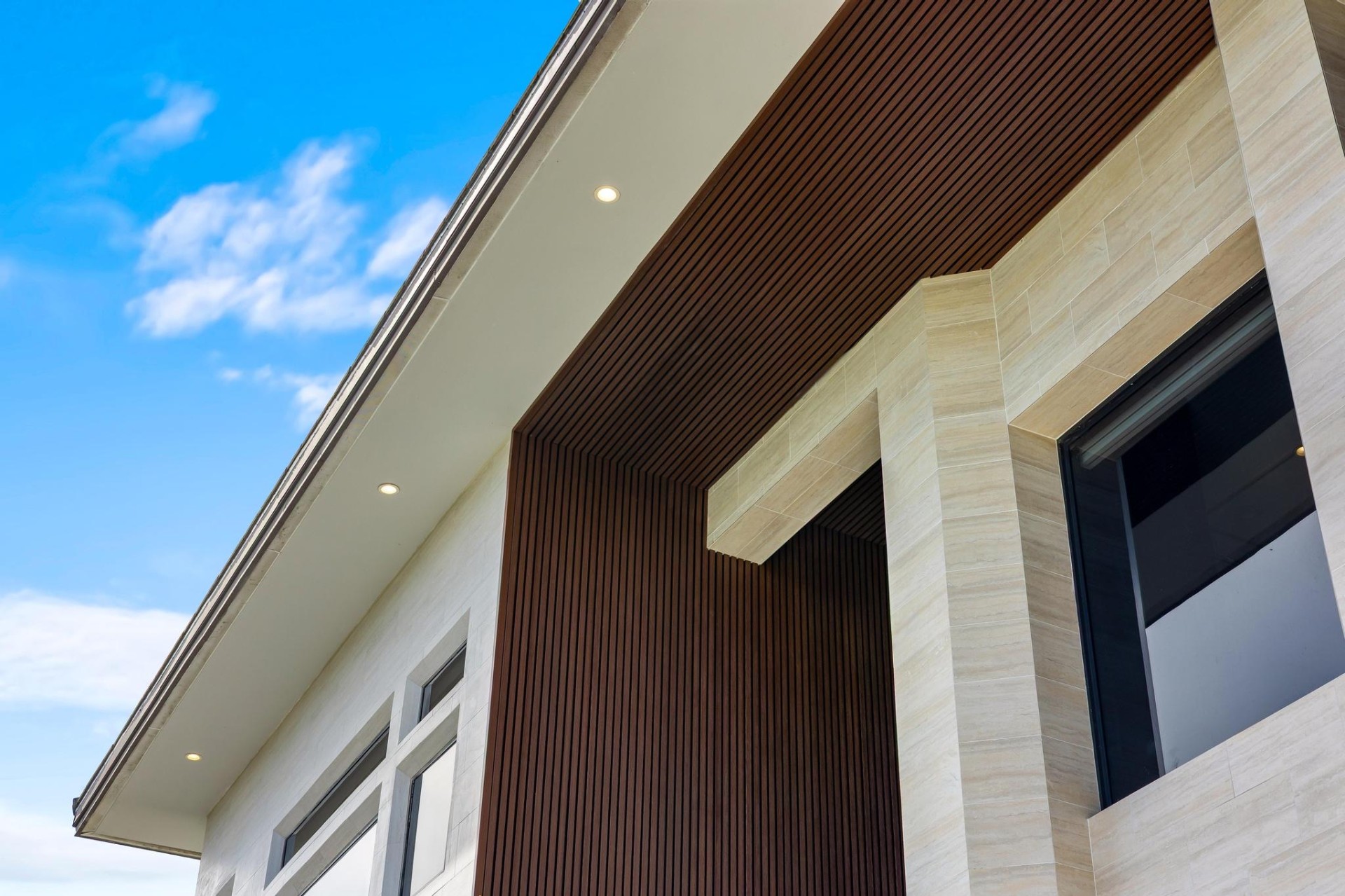
- Vertical slat screens: Open-joint installations that create light and shadow patterns
- Mixed-material facades: Wood panels combined with metal, glass, concrete, or stone
- Charred wood (Shou Sugi Ban): Japanese technique of charring wood for dramatic black texture
- Rainscreen systems: Ventilated cladding that combines performance with design flexibility
- Wrapped volumes: Wood cladding wrapping continuously from wall to soffit or wall to deck
Design Approaches
Full facade cladding: The entire exterior covered in wood creates a warm, cabin-inspired aesthetic — elevated to contemporary standards through clean details and precise installation.
Accent panels: Wood used on select portions of the facade (entry wall, upper story, balcony) creates visual interest and focal points without the cost of full cladding.
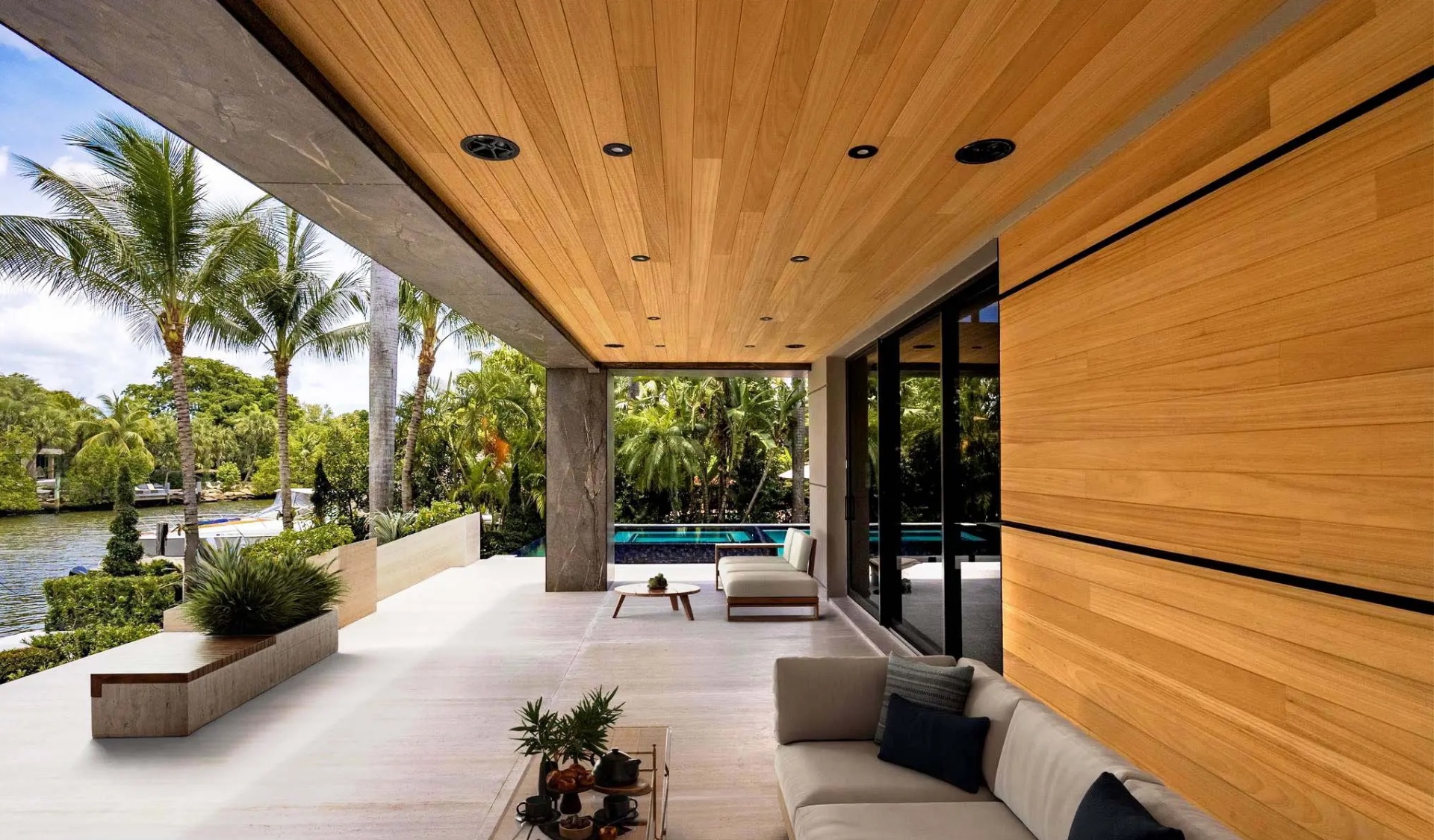
Feature walls: A single dramatic wood wall — often at the front entry or around an outdoor living area — serves as the architectural centerpiece.
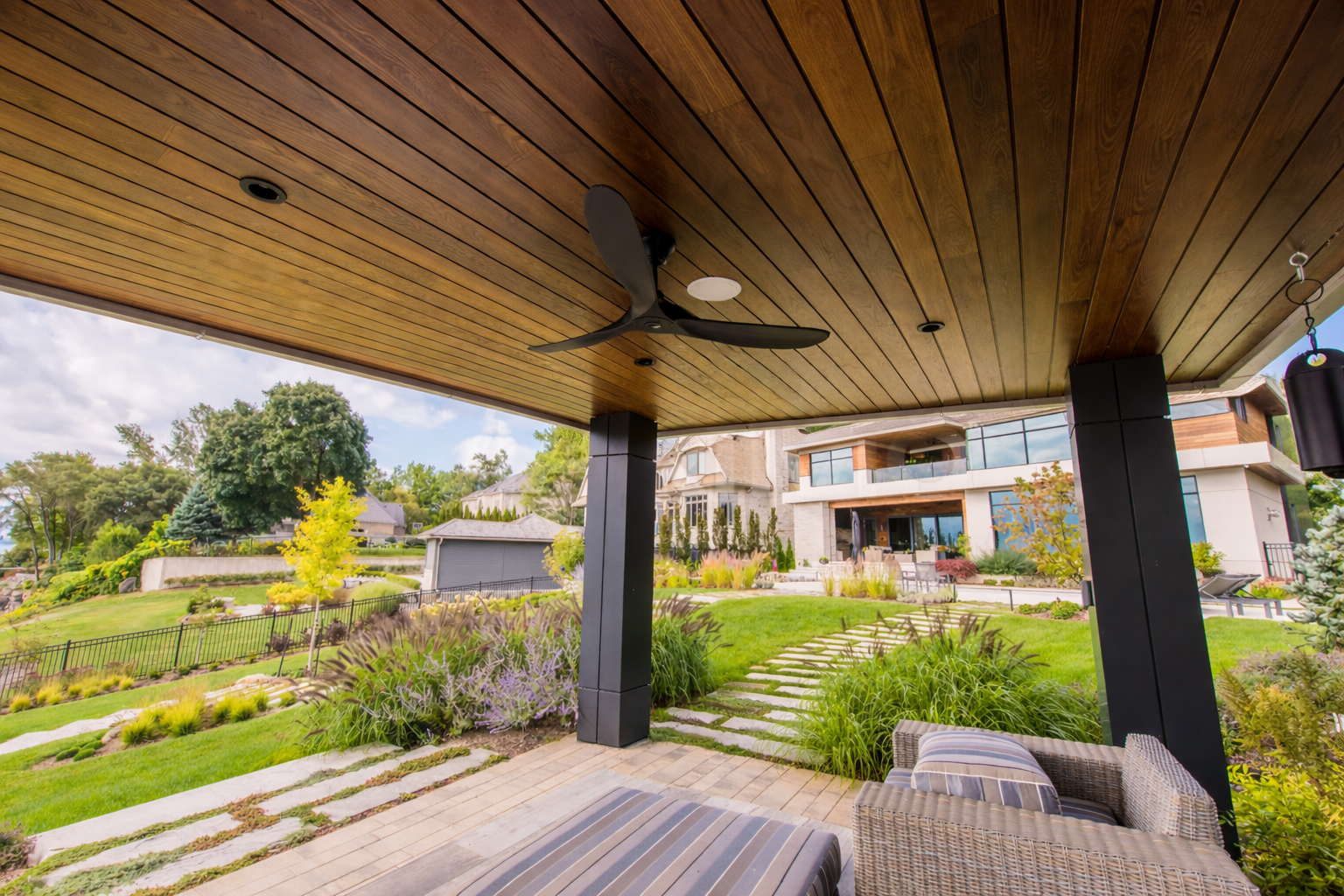
Ceiling and soffit extensions: Wood cladding extended from the wall plane onto ceilings and soffits creates a seamless, wrapped effect popular in modern design.
Material Selection for Modern Design
The material you choose defines the design outcome:
| Material | Design Character | Best Applications |
|---|---|---|
| Thermo Wood Ayous | Warm, uniform, refined | Residential facades, soffits, feature walls |
| Ipe | Rich, dramatic, dense | Commercial facades, high-end residential |
| Composite Slats | Consistent, contemporary | Accent walls, interior-exterior transitions |
| Cedar | Traditional, rustic warmth | Cottage, cabin, Pacific NW design |
| Charred Wood | Dark, textural, dramatic | Statement walls, Japanese-influenced design |
Planning a decking or cladding project?
Use our material estimator or explore our premium hardwood and thermo wood materials.
Orientation and Pattern
Board orientation dramatically changes the visual effect:
- Horizontal boards: Emphasize width and ground the building. The most common and versatile orientation.
- Vertical boards: Emphasize height and create a sleek, contemporary feel.
- Diagonal: Dynamic and eye-catching but more complex to install and generates more waste.
- Mixed orientation: Using horizontal on one section and vertical on another creates visual separation and architectural interest.
- Herringbone/chevron: Creates a premium, detailed pattern for feature walls and accent areas.
Color and Finish
Modern exterior wood walls embrace both natural aging and intentional finishing:
- Natural weathering: Letting thermo wood or ipe age to silver-gray creates a sophisticated, understated palette that harmonizes with natural landscapes
- Oiled finish: UV-protective oil maintains the warm brown tones and enhances grain visibility
- Stained: Semi-transparent stains can adjust the tone while showing the grain — popular in Scandinavian-influenced design
- Painted: Bold color (black, deep navy, forest green) creates dramatic contrast with surrounding materials
Practical Considerations
- Ventilation: All exterior wood walls need a ventilated cavity behind them (rainscreen principle)
- Transitions: Plan window and door trim details early — they define the quality of the final result
- Fire codes: Check local requirements, especially in wildfire-prone areas. Ipe (Class A) meets the strictest codes.
- Budget: Feature walls and accent panels offer the design impact of wood cladding at a fraction of full-facade cost
- Maintenance access: Consider how you will clean and maintain higher sections of the facade
Ready to start your project?
Explore our premium materials or get help planning your project.