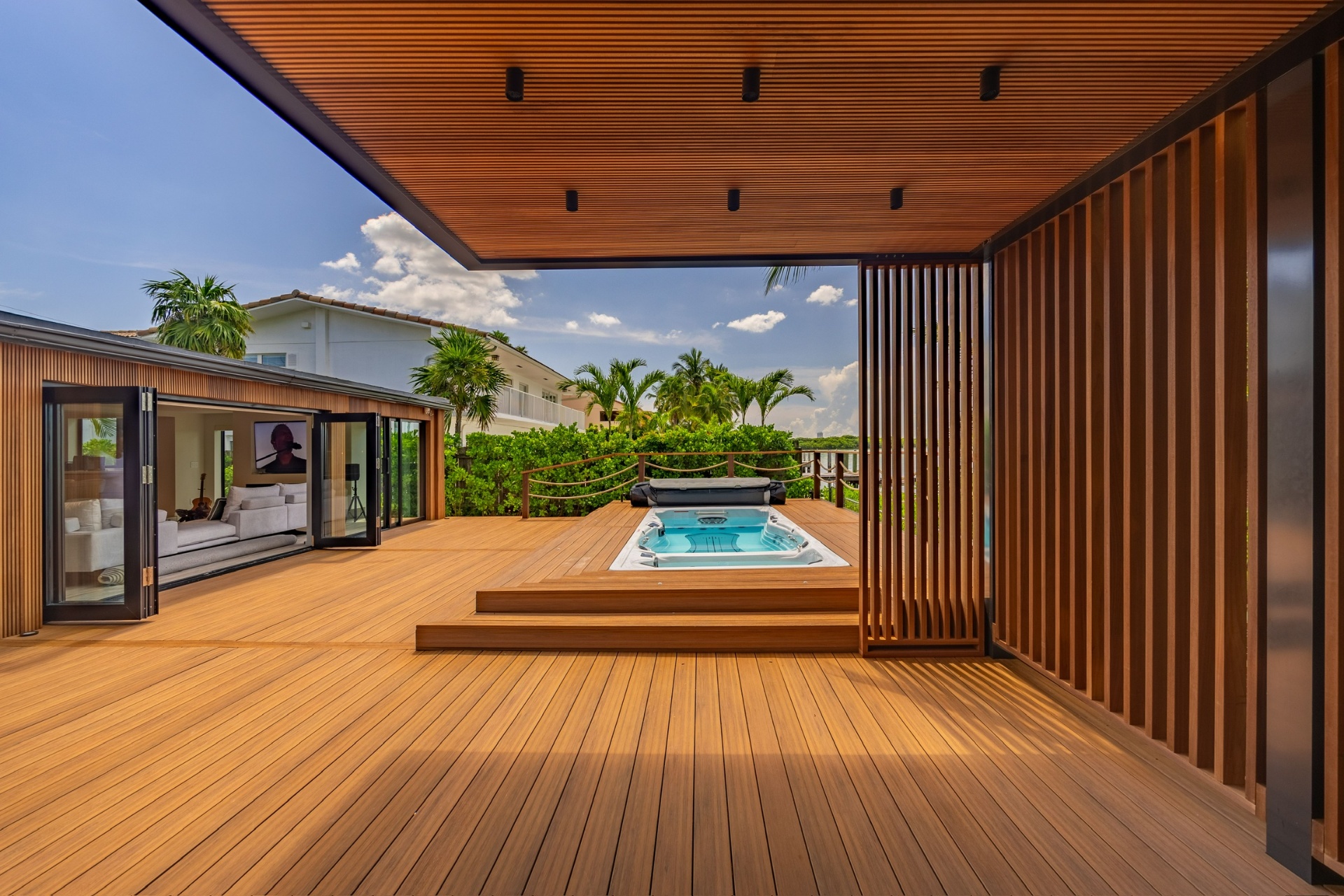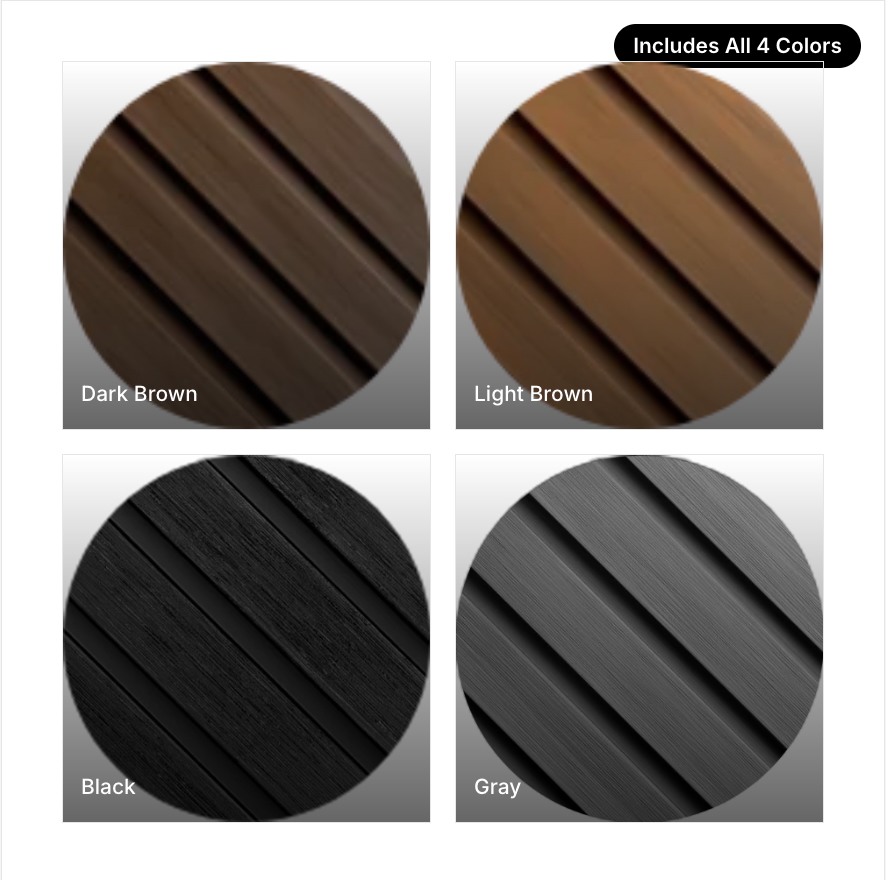
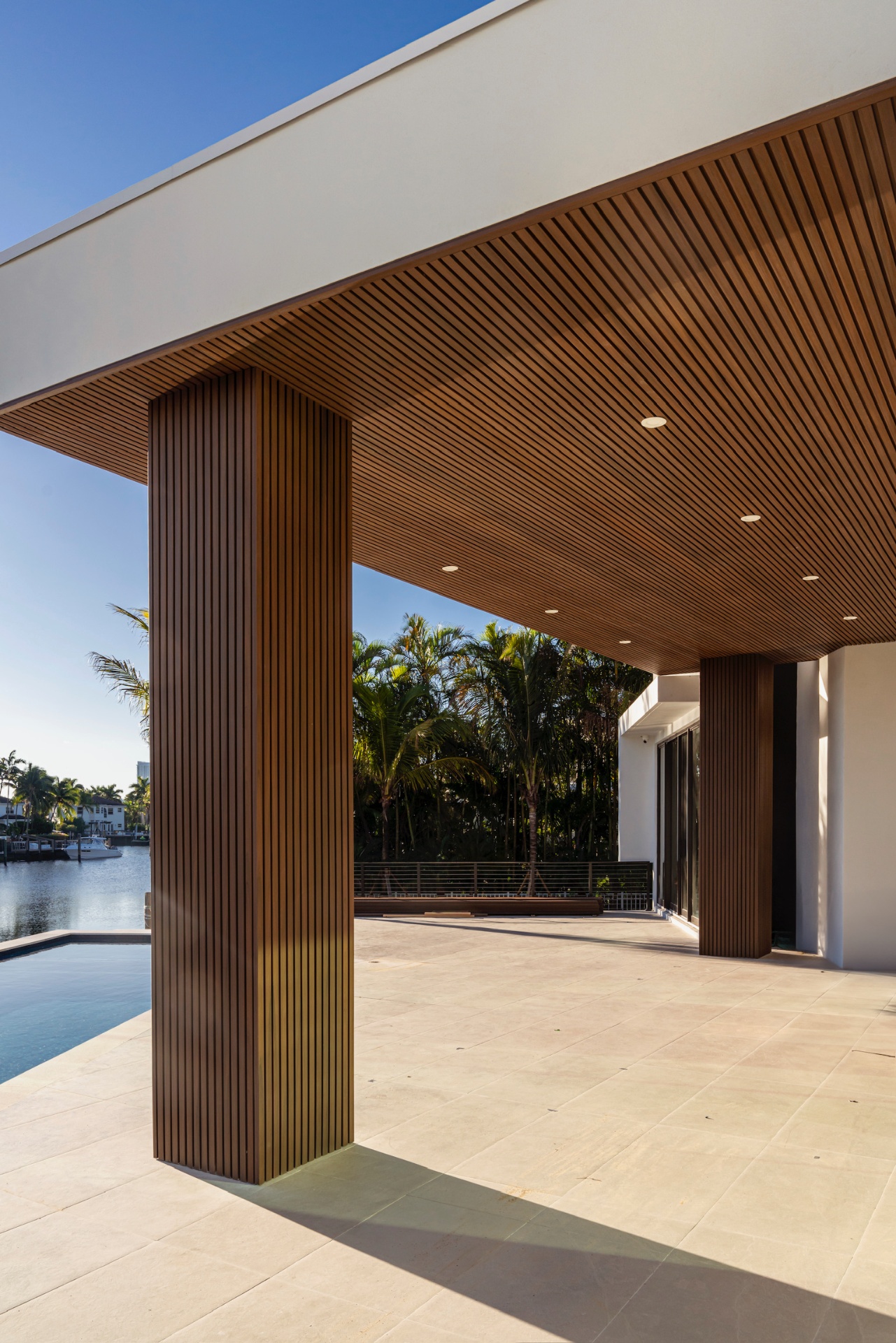
Both wood and composite can work beautifully for exterior cladding, ceilings, and decking. The right choice depends on what you value most — natural character that evolves over time, or uniform color with lower maintenance. This short guide walks through the trade-offs so you can choose with confidence.
Start With the Real Question
Before comparing brands or prices, get clear on what you actually want from the material:
- Do you want a surface that feels natural and evolves over time?
- Or do you want something more uniform and lower maintenance?
Your honest answer points to the right material faster than any spec sheet.
Natural Wood Offers Character
Every board carries its own grain, tone, and texture. That natural variation is what gives wood its warmth — and what makes it so hard to replicate.
For projects where authenticity and a premium, tactile feel matter, real wood remains the reference point. It reads as a material, not a finish.
Composite Offers Consistency
Composite materials are engineered to look more uniform from board to board. That can be a real advantage if you want predictable color and pattern across a large facade or deck.
It's also typically the lower-maintenance option, which is why composite is a common choice for busy projects, rentals, and surfaces in hard-to-reach areas.
Planning a decking or cladding project?
Use our material estimator or explore our premium hardwood and thermo wood materials.
Wood Changes Over Time
Natural wood responds to sun, moisture, UV, and weather. Left unfinished, many exterior woods will gradually weather to a silver-gray patina.
- Some people love that natural aging and let it happen on purpose.
- Others use an oil or finish to help maintain the original tone over time.
Neither approach is wrong — it's a design choice. The key is knowing which look you're signing up for before installation.
Composite Is Lower Maintenance
Composite typically needs less upkeep than natural wood. For many projects, occasional cleaning is enough to keep it looking consistent year after year.
There's no oiling cycle, no sanding, and no refinishing — just a rinse when it gets dusty or dirty.
What About Wood for Decking?
Underfoot, the two materials feel different:
- Wood often feels more natural under bare feet and can feel more comfortable in direct sun.
- Composite is typically lower maintenance, but some boards may get hotter in direct sun, especially darker colors.
If your deck sees a lot of barefoot use in full sun, that comfort difference is worth weighing alongside the maintenance question.
So Which One Is Better?
There's no universal winner — only the better fit for your project:
- For a warm, natural, premium look, wood is hard to replace.
- For uniformity and easier upkeep, composite may be the better fit.
Many of our architectural projects actually use both — natural wood at human scale where the grain can be appreciated, and composite on high or hard-to-access surfaces where maintenance access is limited.
Compare Before You Commit
Photos help, but samples tell the real story. Grain, color depth, and surface texture all read differently in person than they do on a screen.
Explore premium wood and composite cladding and decking options online, then order free samples to compare them side by side in your own light before you commit.
Ready to start your project?
Explore our premium materials or get help planning your project.