
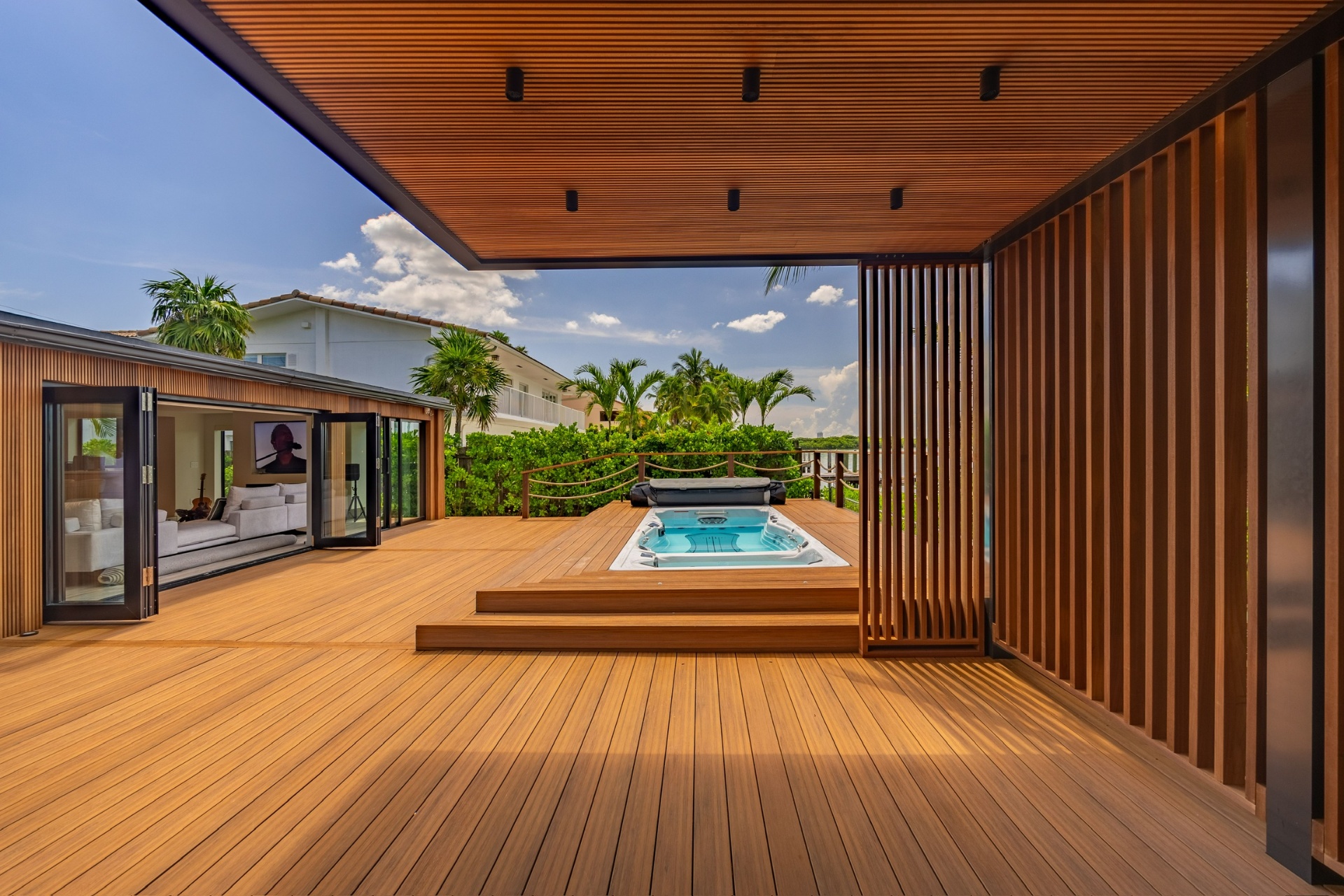
Proper board spacing is one of the most important details in deck construction. Too little space and boards will buckle as they expand. Too much space and you lose structural integrity and aesthetic appeal. This guide covers recommended spacing for different materials and conditions.
Why Spacing Matters
Decking boards expand and contract with changes in temperature and moisture. Correct spacing ensures:
- Room for thermal and moisture expansion
- Water drainage between boards
- Air circulation to prevent mold and rot underneath
- A clean, professional appearance
Incorrect spacing is one of the most common causes of decking failure, buckling, and premature deterioration.
Recommended Spacing by Material
| Material | Side-to-Side Gap | End-to-End Gap | Perimeter Gap |
|---|---|---|---|
| Ipe (installed dry) | 3/32" to 1/8" (2–3mm) | 1/8" (3mm) | 1/4" (6mm) |
| Ipe (installed wet/green) | Board-to-board (tight) | 1/16" (1.5mm) | 1/8" (3mm) |
| Composite | 1/4" to 3/8" (6–10mm) | 1/8" to 1/4" (3–6mm) | 1/2" (12mm) |
| Thermo Wood | 5–8mm | 3–5mm | 8–10mm |
| Pressure-Treated Pine (wet) | Board-to-board (tight) | 1/8" (3mm) | 1/4" (6mm) |
These are general guidelines. Always follow the specific manufacturer\'s recommendations for the product you are using.
Factors That Affect Spacing
- Moisture content at installation: Kiln-dried or thermo wood boards are installed with gaps. Wet/green boards are installed tight because they will shrink.
- Climate: Wider gaps in hot, humid climates. Tighter gaps in consistently dry climates.
- Board width: Wider boards need proportionally larger gaps because they expand more.
- Sun exposure: South-facing decks experience more thermal expansion and may need slightly wider spacing.
- Fastening method: Hidden clip systems often have built-in spacing guides.
Planning a decking or cladding project?
Use our material estimator or explore our premium hardwood and thermo wood materials.
How to Maintain Consistent Spacing
Professional deck builders use these techniques:
- Spacer tools: Purpose-built plastic spacers in various widths (most common: 1/8", 3/16", 1/4")
- Nails as spacers: Common 16d nails are approximately 1/8" and work as quick gap gauges
- Hidden clip systems: Many clips have integrated spacing tabs, ensuring uniform gaps without additional tools
- String lines: Run parallel string lines every 3–4 feet to keep boards straight over long runs
Common Spacing Mistakes
- Installing dry wood with no gap: Boards will buckle when they absorb moisture
- Inconsistent spacing: Variable gaps are visually distracting — use spacers consistently
- Forgetting perimeter gaps: Boards need room to expand at walls, posts, and edges
- Using the wrong gap for the material: Composite expands more than hardwood — always follow material-specific guidelines
Special Considerations for Ipe
Ipe is one of the most dimensionally stable decking materials, which means it moves less than most woods. However, proper spacing is still essential:
- Ipe\'s high density means it absorbs moisture slowly — spacing can be tighter than softwood
- Pre-drill all fastener holes to prevent splitting
- Use stainless steel or specially coated screws rated for tropical hardwood
- If using hidden clips, choose clips rated for high-density hardwood
Ready to start your project?
Explore our premium materials or get help planning your project.