
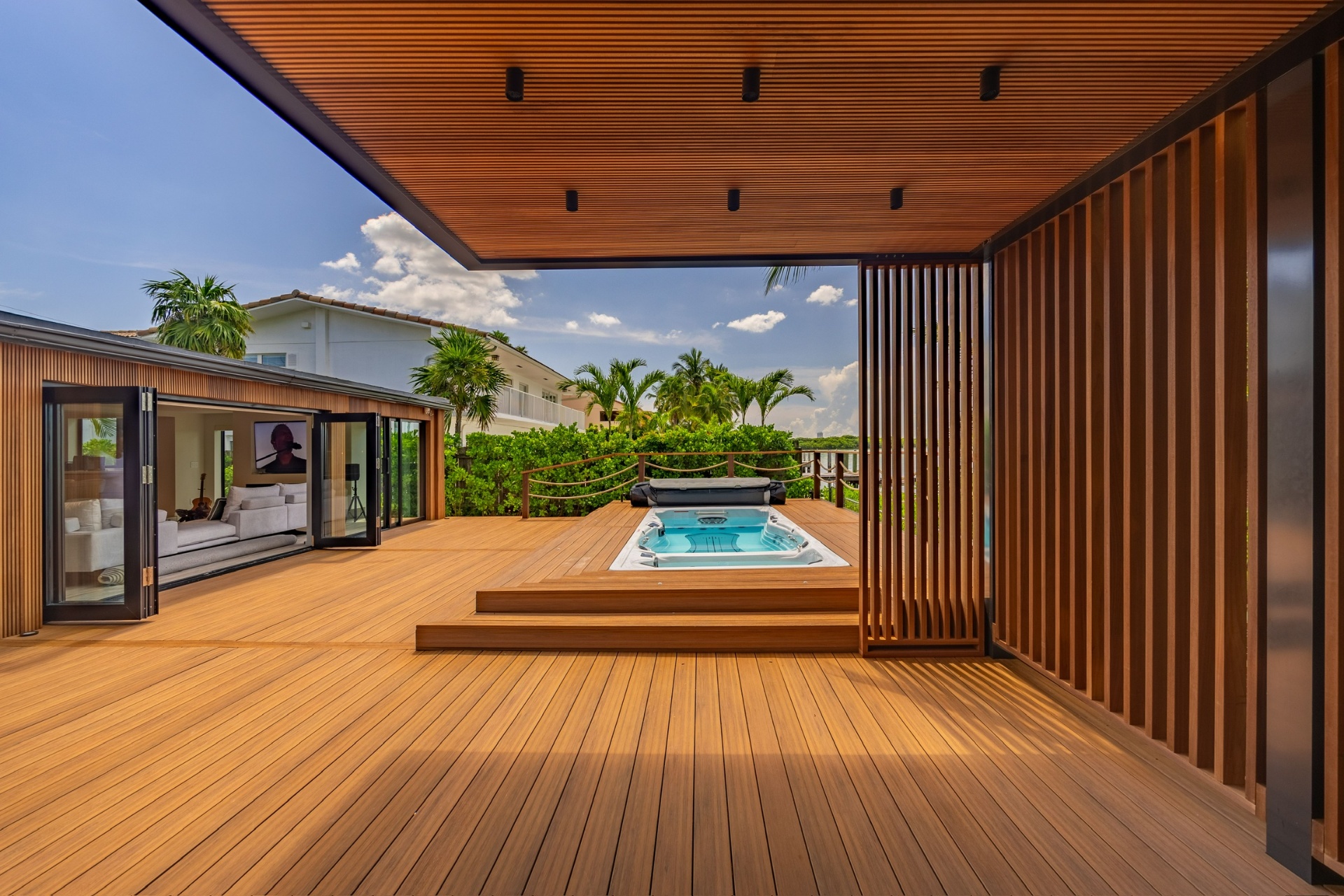
Board width is one of the most impactful design decisions in a deck project. It affects the visual proportion, structural requirements, coverage efficiency, and overall aesthetic of the finished deck. This guide helps you choose the right board width for your project.
Common Decking Board Widths
| Nominal Size | Actual Width | Best For |
|---|---|---|
| 1×4 | 3.5 inches | Narrow decks, detailed patterns, cladding crossover |
| 1×6 | 5.5 inches | Most residential decks — the industry standard |
| 5/4×6 | 5.5 inches (thicker) | Residential decks where added thickness is desired |
| 2×6 | 5.5 inches (structural) | Heavy-duty commercial applications |
The 1×6 board is the most popular decking width worldwide, offering an ideal balance of coverage, structural span, and visual proportion.
1×6: The Standard Choice
The 1×6 board has become the industry standard for residential decking for several reasons:
- Optimal span: Can span standard 16-inch joist spacing without excessive deflection
- Coverage efficiency: Covers area quickly without requiring excessive fastening points
- Visual proportion: Creates a balanced look that works with any deck size
- Material availability: The most commonly stocked and cost-effective width
- Stability: Less prone to cupping than wider boards
iLumber Ipe Wood Decking is available in the 1×6 profile — the recommended width for most residential and commercial projects.
Narrower Boards (1×4)
Narrow boards create a finer texture and more detailed appearance:
Advantages:
- More refined, contemporary aesthetic
- Better for curved deck sections (bends more easily)
- Less prone to cupping
- Works well for transitional areas and borders
Disadvantages:
- Requires more boards (and fasteners) to cover the same area
- Higher labor cost per square foot
- More joints mean more opportunities for water penetration
Planning a decking or cladding project?
Use our material estimator or explore our premium hardwood and thermo wood materials.
Wider Boards
Wider boards (6+ inches actual) create a bold, expansive look:
Advantages:
- Fewer boards needed — faster installation
- Dramatic, modern appearance
- Fewer joints
Disadvantages:
- More prone to cupping and warping
- May require closer joist spacing
- Higher material cost per board
- More expansion and contraction per board
Board Width and Deck Design
Consider these design principles when choosing board width:
- Scale: Match board width to deck size. A small balcony deck looks better with narrow boards. A large pool deck can handle wide boards.
- Direction: Boards running lengthwise make a deck feel longer. Boards running across make it feel wider.
- Borders: Consider using a different width or direction for border/picture-frame edges
- Mixing widths: Some designs use alternating widths for visual interest, though this adds complexity
Cost Impact of Board Width
Board width affects total project cost in several ways:
- Fewer boards = less labor: Wider boards mean fewer rows and fewer fastening points
- Material cost: Cost per square foot is generally similar across widths, but narrower boards require more linear feet of material
- Fastener cost: Narrower boards need more fasteners per square foot
- Substructure: Wider boards may require closer joist spacing, increasing substructure cost
For most projects, the 1×6 width provides the best value considering material, labor, and substructure costs combined.
Ready to start your project?
Explore our premium materials or get help planning your project.