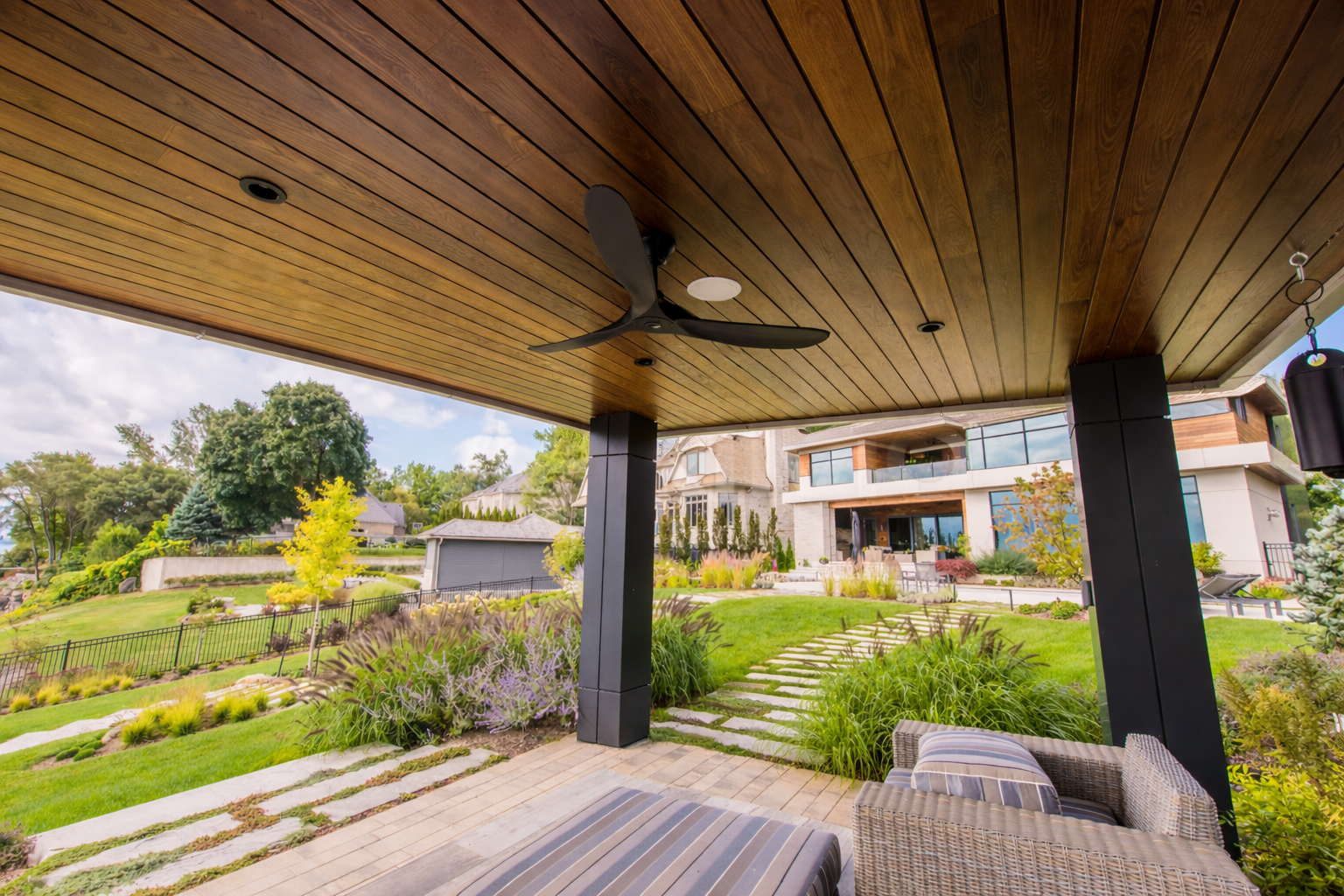
Thermo wood cladding has become one of the most sought-after materials in modern architecture. Its combination of natural beauty, environmental responsibility, and long-term performance makes it an ideal choice for residential and commercial facades. This guide covers everything from the science behind thermal modification to installation best practices.
What Is Thermo Wood Cladding?
Thermo wood cladding is exterior siding made from wood that has undergone thermal modification — a process that heats the timber to 180–230°C in a controlled, oxygen-free environment using only heat and steam.
This process permanently changes the wood at a cellular level:
- Hemicellulose (the component that attracts moisture) is broken down
- The wood becomes significantly more dimensionally stable
- Decay resistance improves to Class 1–2 (EN 350 standard)
- The color darkens to a rich, warm brown throughout the board
- No chemicals are used at any stage of the process
Why Choose Thermo Wood for Cladding?
Thermo wood has gained widespread adoption for several reasons:
- Chemical-free durability: Unlike pressure-treated lumber, thermo wood achieves its decay resistance through heat alone
- Dimensional stability: Reduced moisture absorption means less warping, cupping, and checking
- Consistent quality: Factory-controlled process ensures uniform performance across all boards
- Sustainability: FSC and PEFC certification available. The Ayous species is fast-growing and responsibly harvested
- Design flexibility: Available in multiple profiles (T&G, shiplap, channel, open joint) for diverse architectural styles
- Weight advantage: Thermo Wood Ayous is lighter than most cladding alternatives, reducing structural load and installation effort
Available Profiles
Thermo wood cladding comes in several profile options to suit different design approaches:
- Tongue and Groove (T&G): Interlocking boards create a seamless surface. Ideal for a clean, contemporary look.
- Shiplap: Overlapping boards with a subtle shadow line. Classic appearance with excellent weather protection.
- Channel / V-Joint: Similar to T&G but with a visible channel between boards for a defined linear pattern.
- Open Joint: Boards mounted with visible gaps over a dark membrane. Creates a modern, airy facade.
Profile selection depends on the desired aesthetic, building orientation, and local climate conditions.
Planning a decking or cladding project?
Use our material estimator or explore our premium hardwood and thermo wood materials.
Cost of Thermo Wood Cladding
Thermo wood cladding typically costs $4–$8 per square foot for materials, depending on profile, dimensions, and order volume.
| Cost Component | Range per Sq Ft |
|---|---|
| Thermo wood boards | $4–$8 |
| Battens/furring strips | $0.50–$1.50 |
| Fasteners and clips | $0.50–$1.00 |
| Membrane/housewrap | $0.25–$0.50 |
| Professional installation | $4–$8 |
| Total installed | $9–$19 |
Installation Best Practices
Proper installation is essential for maximizing the lifespan of thermo wood cladding:
- Rainscreen principle: Always install over a ventilated cavity (minimum 20mm gap) to allow moisture drainage and air circulation
- Moisture barrier: Use a breathable housewrap behind the battens
- Acclimation: Allow boards to acclimate to site conditions for 48–72 hours before installation
- Fastening: Use stainless steel screws or clips. Pre-drill for face-screwing. Hidden clip systems provide the cleanest appearance.
- End grain sealing: Seal all cut ends with a wax-based end sealer to prevent moisture ingress
- Expansion gaps: Leave 2–3mm gaps at board ends and around openings for thermal movement
Maintenance and Finishing
One of thermo wood cladding's greatest advantages is its low maintenance requirements:
- Unfinished: Left untreated, thermo wood weathers to a consistent silver-gray patina over 6–12 months. This is purely cosmetic — the wood's durability is unaffected.
- Oiled: Apply a UV-protective oil once every 1–2 years to maintain the original warm brown color. Use a pigmented oil for best UV protection.
- Cleaning: Annual wash with mild soap and water. A soft brush or low-pressure wash removes dirt and organic buildup.
Thermo wood does not require sealing, staining, or painting for performance — any finish is purely aesthetic.
Ready to start your project?
Explore our premium materials or get help planning your project.